
Shift-quality evidence triage agent
The shift review queue retains source images. Approved records enter the task list; contradictory or incomplete evidence stays under review instead of closing automatically. The workflow, tool calls and human approval are simulated.
The shift review queue retains source images. Approved records enter the task list; contradictory or incomplete evidence stays under review instead of closing automatically.

- 01 Read evidence
- 02 Tool calls
- 03 Evidence-linked plan
- 04 Human review
- 05 Approval and command gate
The item image and event context are read while the item arrives. No live external-system connection is used.
- Evidence records
- —
- Simulated approval
- —
- Simulated tool calls
- —
Scenes are illustrative simulations; they are not customer references or performance guarantees.
Need
At shift handover, visual-defect clusters, pending reviews and item records are scattered across screens. Alarm counts without context do not explain which finding to inspect first.
Solution approach
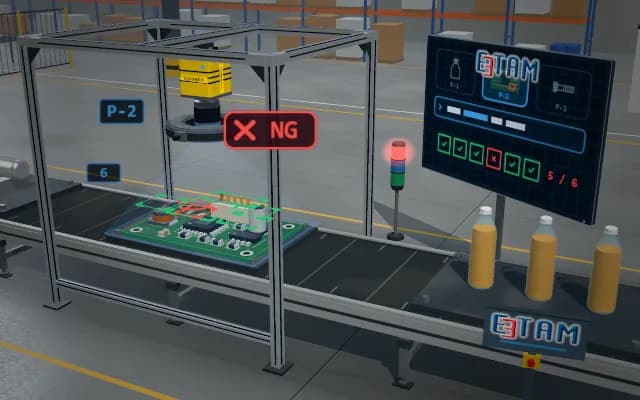
The agent gathers images and quality records through controlled read-only tools. It groups related defect events, separates evidence gaps and drafts reasoned priorities. The operator reviews and approves task-assignment proposals.
Process steps
- 01
Read evidence
The item image and event context are read while the item arrives. No live external-system connection is used.
- 02
Tool calls
The scenario read-only tools compare simulated evidence packages: QUALITY + QUEUE.
- 03
Evidence-linked plan
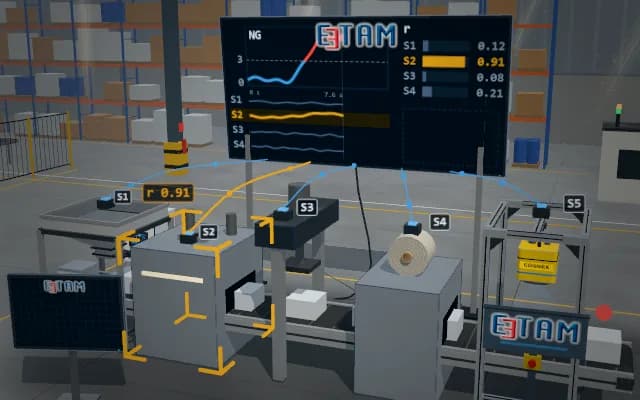
Sources are associated in the CLUSTER / LOG context and a TRIAGE plan is drafted. Missing evidence remains separate.
- 04
Human review
The plan enters simulated review; this phase is not approval. Missing or conflicting evidence produces a visible HOLD state.
- 05
Approval and command gate
Only the virtually approved cycle opens the allowed-command gate and releases the item. A held cycle keeps the gate closed without issuing a command.
Related applications



Let us assess your application together
We test your sample in our laboratory and report on resolution, optics and lighting selection.