
Procedure tracking and supervision in pharmaceutical production
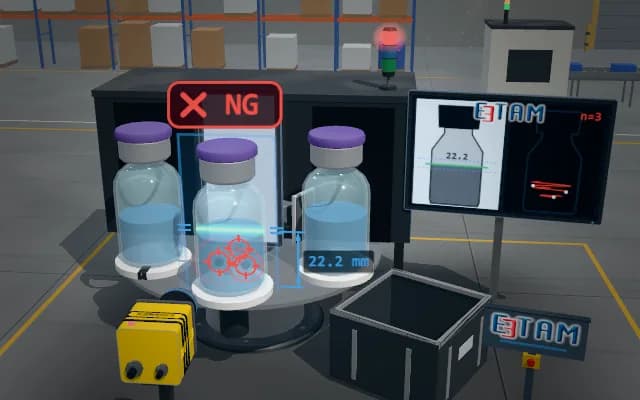
Cameras above the bench watch the work zones; each procedure step is ticked on the checklist once the object and the action in its zone are verified in the image. A skipped or out-of-order step is reported to the operator and logged.
The verification time of every step, the carrier identity and the weight are written to the cycle record; on a skipped step the zone and the checklist are flagged, the stack light warns and the cycle record is not released. A complete cycle closes the record into the electronic batch record.

- 01 Identify
- 02 Weigh
- 03 Label
- 04 Close
The container is placed in zone one; the carrier code is read and the cycle record opens.
- Steps verified
- —
- Weight
- —
- Skipped step
- —
Scenes are illustrative simulations; they are not customer references or performance guarantees.
Need
In a manual procedure the container lands in a slightly different spot each cycle, the operator's hand briefly covers a zone, and small objects such as a label or a lid occupy little of the wide bench image. For a step to count as done, object and outcome must be verified together.
Solution approach
Two overhead cameras watch the bench divided into four zones; when the carrier enters a zone the tracking box locks onto the container. Step-specific evidence is sought in each zone: the carrier code for identity, presence on the scale and the display value for weighing, the applicator stroke and the label for labelling, the seated lid for closing. A skipped step blocks the checklist.
Process steps
- 01
Identify
The container is placed in zone one; the carrier code is read and the cycle record opens.
- 02
Weigh
The container goes on the scale; the camera confirms its presence, the display the weight.
- 03
Label
The applicator strokes, the label is applied and the camera verifies that it is on the container.
- 04
Close
The lid is fitted and the camera verifies that it is in place.
Related applications



Let us assess your application together
We test your sample in our laboratory and report on resolution, optics and lighting selection.