
Separating fixed surface marks from internal particles in filled glass bottles
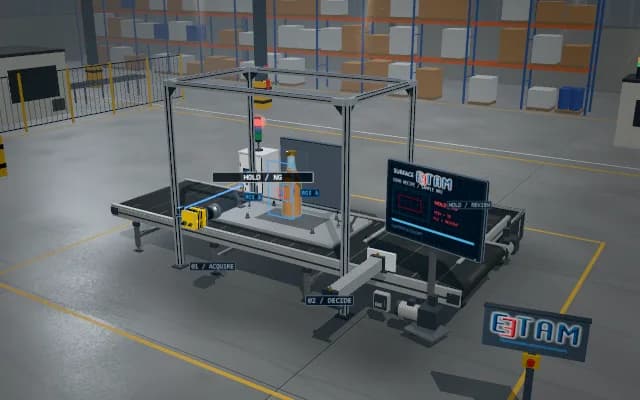
Internal foreign-material inspection of filled glass bottles can confuse glass marks, reflections and liquid-borne proposals. This concept seeks consistent evidence across images rather than treating every dark spot in one frame as contamination.
Possible internal foreign material, cross-image evidence and the review decision are recorded. Image classification does not determine chemical identity; minimum visible-defect and product scopes are defined using real samples.
- 01 Presentation
- 02 Trigger and reference
- 03 Image / profile
- 04 Decision
- 05 Evidence and PLC
Load bottle format
- Sample record
- —
- Image evidence for the proposal
- —
- Acquisition progress
- —
Scenes are illustrative simulations; they are not customer references or performance guarantees.
Solution approach
Transmitted lighting and multiple views are selected for the bottle sample. Images are registered to the body to separate fixed surface marks from proposals inside the liquid volume. Controlled rotation or sequential imaging is tested with real glass and liquid; bubbles and uncertainty remain separate.
Process steps
- 01
Presentation
Load bottle format
- 02
Trigger and reference
Capture images under controlled lighting
- 03
Image / profile
Register images to the bottle body
- 04
Decision
Separate internal proposal from surface mark
- 05
Evidence and PLC
Record evidence; review uncertainty
Related applications




Let us assess your application together
We test your sample in our laboratory and report on resolution, optics and lighting selection.