
Double-seam and side-seam inspection on metal cans
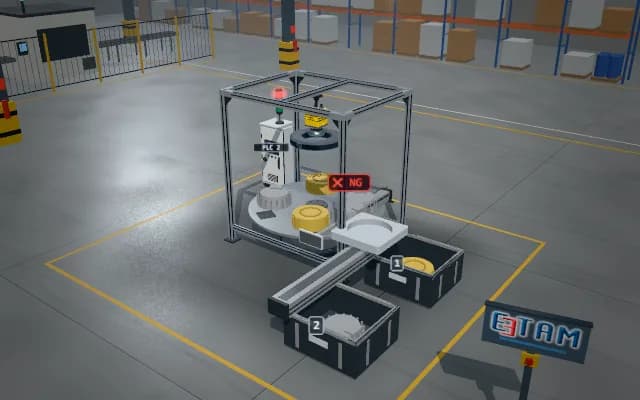
The empty metal can is imaged at a rotating station by cameras at multiple angles under oblique lighting. Double-seam and side-seam contours are compared with a reference; a can with a displaced joint is rejected by the separator.
Double-seam and side-seam offsets are sent to the PLC; a non-conforming can is transferred to the reject channel and its joint contour is shown on the operator display.

- 01 Positioning
- 02 Acquire
- 03 Analyse
- 04 Decide
The empty metal can seats in the rotating nest.
- Seam offset
- —
- Double-seam width
- —
Scenes are illustrative simulations; they are not customer references or performance guarantees.
Need
Reflections on the curved glossy metal seam hide the joint boundary. Can wobble and different viewing angles make actual seam displacement difficult to separate from a position change.
Solution approach
As the can rotates, side and oblique overhead cameras image the double seam and side seam. Oblique bar lighting enhances the contour; the joint aligned to the can axis is compared with the nominal contour.
Process steps
- 01
Positioning
The empty metal can seats in the rotating nest.
- 02
Acquire
Cameras at multiple angles view the joints under oblique lighting.
- 03
Analyse
Double-seam and side-seam contours are compared with the reference.
- 04
Decide
The misaligned joint is marked; the can enters the reject channel.
Related applications




Let us assess your application together
We test your sample in our laboratory and report on resolution, optics and lighting selection.