
Casting-pore masks and regional area fraction
Casting pores can mix with glare and natural texture; a defect box alone does not describe their total visible area or local clustering.
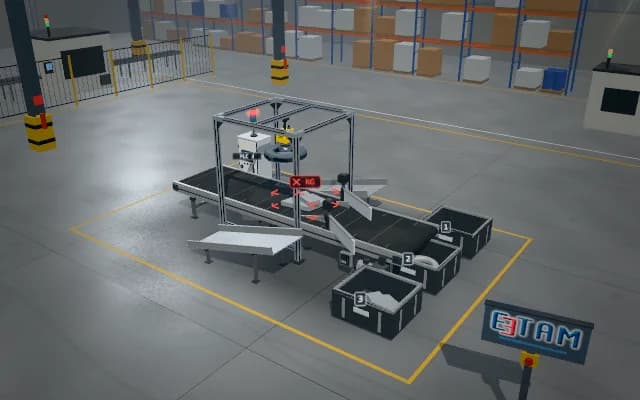
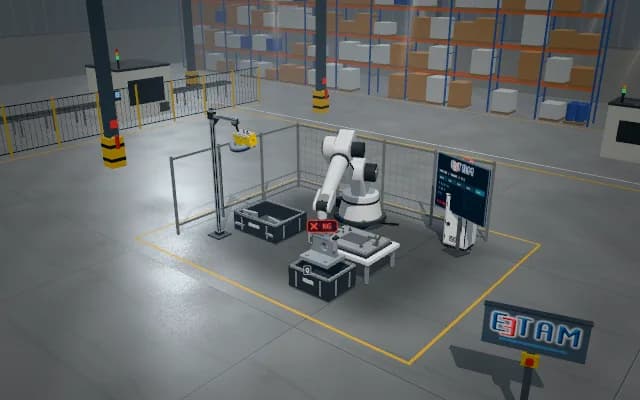
Attach the visible-pore mask and area fraction to the surface record; move an out-of-limit coupon to the review nest. Internal porosity is not assessed.

- 01 Position
- 02 Raw image
- 03 Mask generation
- 04 Region calculation
- 05 Decision
Register the ROI; occluded areas are excluded from visible-area calculations.
- Target-mask area
- —
- Connected regions / objects
- —
- Decision metric
- —
Scenes are illustrative simulations; they are not customer references or performance guarantees.
Solution approach
Pixel or instance masks are derived from the raw image; a coded legend separates background and target regions. Area fractions use only the visible ROI. Separate pore pixels from the main surface and show connected pore count and visible ROI fraction separately. Depth is not inferred from the mask.
Process steps
- 01
Position
Register the ROI; occluded areas are excluded from visible-area calculations.
- 02
Raw image
Keep the controlled raw image in a separate panel.
- 03
Mask generation
Coded colours show target classes or object identities.
- 04
Region calculation
Derive area fraction, connected regions and the decision metric from the mask.
- 05
Decision
Hold an out-of-limit sample for review with its local region marked.
Related applications




Let us assess your application together
We test your sample in our laboratory and report on resolution, optics and lighting selection.